

Life on The Broads is good, although the ever lively tidal rivers can often present their own special challenges and it is essential to always be aware of time, tide and weather conditions.
On behalf of RBOA, I have attempted several times recently to arrange a meeting with the Broads Authority (BA), but have been met every time with total reluctance from its planning department. I have had confirmation though that another consultation is planned as regards residential boating and that RBOA will be invited to participate in that.
Current attitude from BA is difficult to judge. Continuous cruisers who abide by the time limits at public moorings (usually 24 hours/no return within 24 hours) are left alone; and I've neither seen nor heard of any issues against those who discover wild moorings and use them for a few days at a time. In my experience, BA Rangers are invariably super helpful throughout the whole year.
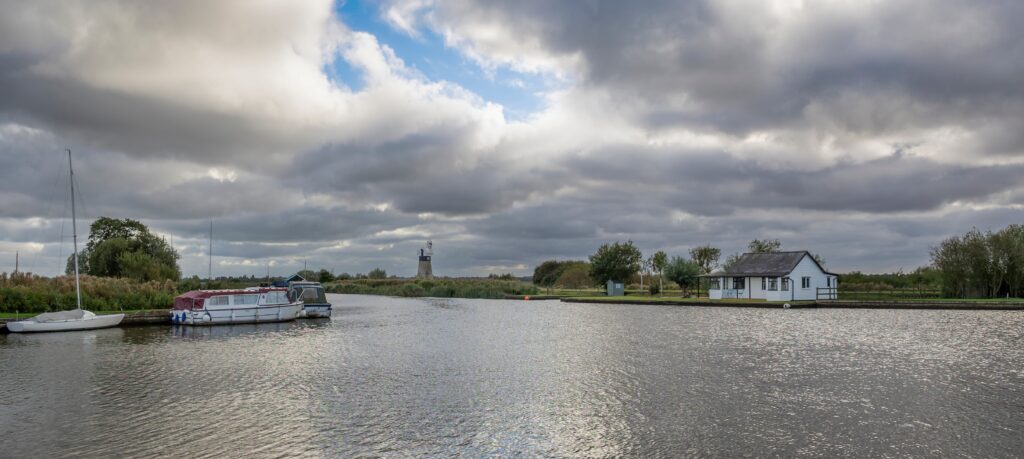
BA is presently in enforcement mode, though, against the owner of riverside sites at The Berney Arms, The Beauchamp Arms and Loddon Marina, all for repeated breaches of planning conditions. However, those breaches are, and have been, very long running disputes between him and/or his associated companies and BA.
In truth, I do believe BA is anti-residential boating; indeed BA is constantly and publicly criticised for its apparent lack of respect for boating in general. River tolls have repeatedly increased year on year at levels way above inflation and it certainly appears that a large swathe of public perception is that if BA had its way conservation and preservation would be given priority over navigation. Fortunately, The Broads Act legally prohibits that - so far.
As for The Middle Levels, the Commissioners (MLC) are very supportive of boaters of all denominations, provided they pay their way and abide by local rules and by-laws. For instance, during its annual licence fee review, MLC had the opportunity to introduce a surcharge on continuous cruisers, as per CRT, but had absolutely no desire to do so.
Clearly, RBOA's support for The Middle Level Bill (The Bill), which eventually gave MLC full navigation authority status, was deserved and well placed. We have a position on the MLC Navigation Advisory Committee, which has considerable "teeth" as defined in The Bill, and we (RBOA) are holding the NAC Chair for the current year.
Overall, it is very much to RBOA’s credit that we continue to promote and spread our stance and support of “Responsible Residential Boating” as a counter against those who still fail to acknowledge the small but substantial and beneficial input our chosen lifestyle has in reducing the current UK wide housing shortage.
Whilst the fight for regularised residential berths is desirable, right and proper, we must also be actively calling for more less-formal live-aboard opportunities within marinas and other mooring sites – unhindered long term or intensive mooring facilities. This type of usage means moorings operators attract no special responsibilities as regards residential use but do enjoy the guarantee of regular rental incomes if managed correctly. Where this does occur, it is proven that adjacent leisure moorers undoubtedly enjoy the added security and continuity that live-aboards provide, whilst the live-aboards enjoy an acceptable level of mooring security, albeit perhaps a little reduced, knowing that provided they obey the rules they become valued long term customers.
This may be considered by some to be a somewhat simplistic idea, one that still raises planning issues; but if planning authorities could be convinced to relax enforcement of usage limits for existing moorings, many more live-aboards could be adequately provided for.
After all, in truth, it is often difficult to define or prove just what is live-aboard use – a day, a week, a month, a year – and why should anyone other than the moorings providers have any say in how their businesses operate, provided they create no detrimental effect to others?
Alan Wildman (June2025)